Research

What we're learning about AI in businesses like yours.

Short, practical research for owners, CFOs, division heads and commercial heads at Indian auto component makers. Most of it you can act on this month.

A commercial desk buried in invoices, purchase orders and files, a laptop open on a spreadsheet

The AI gap is widening.

52% of large firms use AI. 17.5% of small firms do. OECD, 2025

5% of companies get AI value at scale. 60% get little or none. BCG, 2025

92% of Indian knowledge workers already use AI. 72% bring their own tools. Microsoft and LinkedIn, 2024

The report

The AI report written for your size of business.

Deloitte, BCG and McKinsey study companies a hundred times your size. We studied what happens under ₹500 Cr, or inside a division of that size, where there is no data team and one person signs off.

Free report · 2026 edition

The SME AI Gap Report 2026

Why the big-company AI playbook fails Indian manufacturers, and what the ones getting results do instead.

  • 5%of companies get AI value at scaleBCG, 2025
  • 70%of making AI work is people and process, not technologyBCG, 2024
  • 6%typical EBITDA at an Indian MSME, the margin AI has to protectWEF × Office of the PSA, 2025

Inside

  1. The 10-20-70 trap. Why buying the AI tool is the cheapest 10% of the job, and who does the other 70% in a firm with no transformation team.
  2. Gap 2: The Excel-and-WhatsApp ceiling. Where your data actually lives, and why that is an advantage for commercial AI.
  3. Gap 5: The one job to give AI first.
  4. The 90/80 test.
  5. 12 gaps, scored.

Email only. Opens straight away. No spam, no sales calls unless you ask.

Growing research

Where AI worked, and where it didn't.

We're asking ten leaders where AI worked and where it didn't. Here's what they said.

First findings coming soon.Nothing is published here until a leader has answered. We will not fill this space with guesses.

What we ask each one

  1. Where did AI pay back, in rupees?
  2. Where did it stall, and why?
  3. What would you do first if you started again?
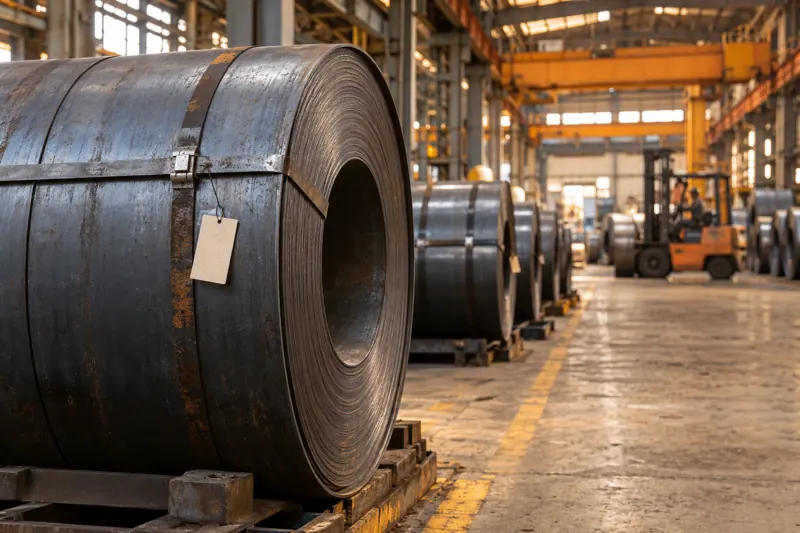
Hot-rolled steel coils stacked in a warehouse

Steel Alarm

Steel moved. Here is what you're owed.

When steel, aluminium or copper prices cross a typical pass-through trigger, Steel Alarm tells you roughly what an OEM clause owes a supplier like you, before the claim window closes. Free on WhatsApp, opt-in only.

We message you on WhatsApp when Steel Alarm opens. Nothing else.

Steel AlarmWhatsApp

Steel HRC is up 4.2% this quarter. On ₹10 Cr of steel spend, a typical pass-through clause puts about ₹42 lakh due to you.

Most OEM claim windows close in 90 days. Reply CALC to estimate your own number.

CALC

Sample alert. Figures are illustrative.

Notes

Free notes, no email needed.

Each one is something you can act on this month.

PracticeOct 2026

Raw-material price clauses: stop claiming late

A quarterly routine that turns index movements into claims an OEM buyer can check in minutes.

Most OEM contracts let a supplier revise prices when steel, aluminium or copper move past a trigger. The money is rarely lost because the clause is missing. It is lost because nobody watches the index against every clause, the claim goes in a quarter late, and the evidence is thin when it does.

The routine

  1. List every clause. For each OEM: the index named, the base value, the trigger (often a percentage move) and how often revisions are allowed.
  2. Check the index every month. Compare the current average against each clause's base. Flag any clause past its trigger.
  3. Work out what is due. Raw-material weight per part, times the change in price, times parts shipped in the period.
  4. Build the evidence. The clause extract, the index values, the bill of materials and the dispatch register, in one pack.
  5. Claim in the same quarter, and track it until a revised PO or credit note arrives.
Illustrative example Steel per part 2.40 kg Index change ₹3.44 per kg Parts shipped 1,84,000 Due 2.40 x 3.44 x 1,84,000 = ₹15.2 lakh

Figures are illustrative. Use the formula in your own contract.

MethodOct 2026

Fix the process before you add AI

Most lost money sits in waiting and handoffs, not in the work itself.

A claim that takes twenty minutes of actual work can take three weeks to leave the building, because it waits in inboxes between purchase, accounts and the commercial team. Putting AI on top of that only makes the waiting faster to record.

Sort every step into one of four

  • Delete it. Approvals and handoffs that add nothing.
  • Plain software. Lookups, formulas and reconciliations that follow fixed rules.
  • AI. Reading contracts, matching documents, drafting letters.
  • A person, with the evidence ready. Anything that commits you to an OEM or involves large amounts.

In most plants, more steps land in the first two buckets than people expect. Do that sorting before you buy any AI tool. Then give AI one job: the one at the step where work waits.

Working onOct 2026

Margin by part number: what we're building

One record per part, so every loop knows the cost, the price and the contract behind it.

Most suppliers know their margin by plant, not by part. The drawing lives in engineering, the quote in a spreadsheet, the price in the ERP and the price clause in a PDF. We are building a single record per part number that brings these together: drawing, quote, should-cost, actual cost, selling price, contract terms, engineering changes and margin.

Every recovery loop reads from this record and writes back to it. It is the first thing we set up with a new client, and it is what makes margin by part number possible.

Want to see your leakage in rupees?Book a free assessment